
Engaged Humanities Postdoctoral Fellows
Launched in AY24 as a biennial opportunity, the Humanities Center, in partnership with the Engaged Humanities Network and Office of Research, supports two postdoctoral fellows whose work combines publicly-engaged research, programming, curriculum development and teaching within their 2-year appointment.
Meet the current postdoc fellows
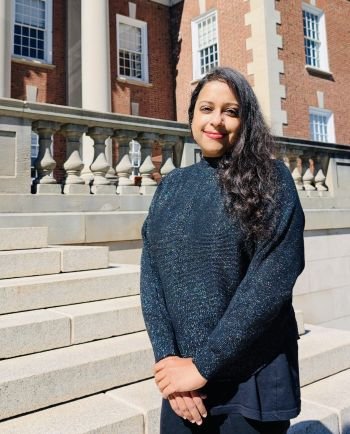
Sayantika Chakraborty, Ph.D. - English
Bio: Sayantika Chakraborty received her Ph.D. in English from the University of Florida in May 2026. Her dissertation titled "Displacement and Emplacement: Climate Migration Stories by Indigenous and Marginalized Women from India" looks at the oft-obscured environmental stories of the women migrants from the minority communities in India/the global South. In her research, Chakraborty utilizes a decolonial-feminist framework in conjunction with Indigenous Research Methodology/IRM that traverse multiple mediums such as literary, archival, historical and oral. She considers herself a public scholar of the environmental humanities and has won numerous scholarships and awards for her research in the field's public facing aspects—for example, the Research Associate position at the Harvard University's Asia Center; the MLA/Modern Language Association's Edward Guiliano Global Fellowship and Public Humanities Incubator Award; Tedder doctoral research funds and Kirkland Dissertation Fellowship from the University of Florida and the prestigious DAAD (German federal funds) short-term research grant for a visiting fellowship at the Rachel Carson Center for Environment and Society in Munich, Germany.
As an Engaged Humanities Network Postdoctoral Fellow at Syracuse, Chakraborty will turn her dissertation into a book project titled Histories in Common: Environmental Violence, Water Governance, and Indigenous Women Activism in South Asia, initiating a dialogue between the forcefully displaced Indigenous women migrants across South Asia (India, Bangladesh, and Nepal), with a focus on their role as water protectors in a time when water has turned into a tool for human consumption, capitalist profit, and colonial control. Chakraborty is excited to be an EHN fellow that will help her further her public facing work, both within and beyond the Syracuse communities. She is specifically thrilled to contribute into the EHN undergraduate research through her community-focused teaching and mentorship.
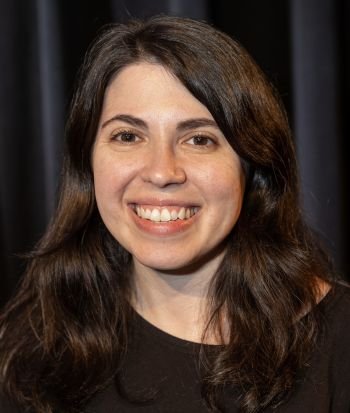
Kirby Sokolow, Ph.D. - Religious Studies
Bio: Kirby Sokolow received her Ph.D. in Religious Studies from the University of Pennsylvania (May 2026). She also holds a B.A. in Religion from Wesleyan University and an M.A. in Religious Studies from NYU.
During her fellowship with EHN, Kirby looks forward to working with community organizations and programs like Project Mend, creating courses on religion and incarceration, and developing her doctoral dissertation into a book manuscript, tentatively titled Buddhist Hells, American Prisons: Karma, Incarceration, and Compliance in the United States. The project explores Buddhism in U.S. prisons and the dynamic relationships between dominant notions of religion, race, criminality, and American belonging since the late 19th century.
Drawing on archival research and media analysis, Sokolow’s dissertation considers the ways popular narratives that celebrate the “transformative” potential of Buddhist prison programming in the U.S. participate in the disciplining, subject-making, and racializing work of state. How does rhetoric that Buddhism can change so-called angry prisoners into compassionate buddhas set up a dichotomy between the “criminal” and the “Buddhist” and gain popularity through racializing assumptions attached to each category? The project also incorporates close readings of memoirs, letters, and essays by imprisoned people, exploring the unexpected ways embodied practices like meditation rewire circuits of feeling in prisons and produce new subjectivities and communities.
She is also a volunteer and co-editor for the health-justice organization and newsletter Prison Health News.
Prior Postdoctoral Fellows
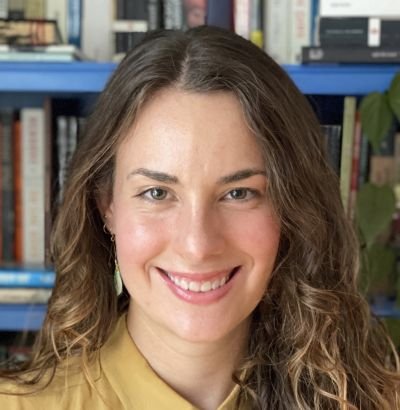
Lauren Cooper, Ph.D. - English
lacooper@syr.edu
Bio: Lauren Cooper (she/her)
Lauren Cooper (she/her) received her Ph.D. in English from Syracuse University in May 2024. She is currently working on a book project, Climate Justice Before the Anthropocene: How Inclement Weather Shaped British and Irish Romanticism, which uses climate history to trace emergent conceptions of environmental justice in canonical and lesser-known works of British and Irish Romantic literature. Her research examines colonialism and the slave trade, class, gender, landscape aesthetics, changing conceptions of wastelands and wildernesses, and crucially, early discourses of environmental justice. She serves as a Community Program Director for Write Out programming at Girls Inc. and a collaborator with Environmental Storytelling Central New York.
Additional accomplishments during Cooper's time as an Engaged Humanities Postdoctoral Fellow:
- Papers / Presentations:
- Keynote at the 2026 Keats Conference: "Thinking about the Weather at Peterloo: Keats and the Political Climate of 1819"
- Ena Wordsworth Bursary recipient for, "The Wordsworths’ Little Ice Age: Climate Injustice in Dorothy Wordsworth’s Grasmere Journals" at the 2025 Wordsworth Summer Conference
- "Jane Austen in the West Indian Sugar Plantation: Tropical Climates and the Cost of Warmth in Mansfield Park" at the 2025 Association for the Study of Literature and Environment (ASLE) Conference
- "Historical Climates of Catastrophe: Climate Injustice after Tambora and Irish Romantic-era Women’s Poetry" at the annual North American Society for the Study of Romanticism (NASSR) conference
- "Dorothy Wordsworth’s Climates: The Grasmere Journals and Climate Justice" at the 2026 Modern Literature Association (MLA) conference
- Article: "Hurricane Season at Mansfield Park: Reading Austen on Slavery through Climate" accepted for publication in ELH (English Literary History)
- Book review on Alan Vardy's Time and Terrain in British Romantic Writing in forthcoming The Wordsworth Circle
- Named Program Chair of the John Clare Society of North America
- Continued to direct Write Out programming at Girls Inc.
- Named 2026–2028 Visiting Assistant Professor in 19th Century British Literature at College of the Holy Cross
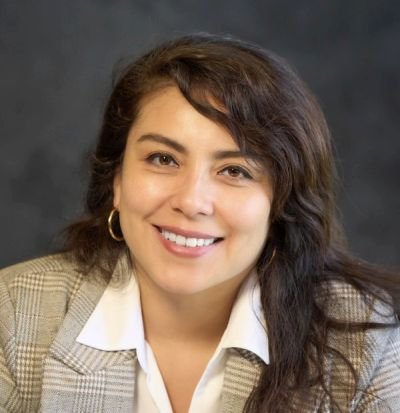
Miryam Nacimento, Ph.D. - Cultural Anthropology, City University of New York (CUNY)
mdnacime@syr.edu
Bio: Miryam Nacimento's doctoral dissertation, "Coca Mestiza: Small farmers, Multiculturalism, and the War on Drugs in Colombia" provides the basis for her first book project--an ethnographic account of the political struggles of impoverished small-scale farmers who cultivate illicit coca in Colombia, a sacred plant from the Andes but also the base of cocaine. The book follows these farmers as they resist state criminalization and confront violence from nonstate armed actors involved in the drug trade.
Her future research extends this focus to the Peruvian Amazon, where she examines the impacts of expanding illicit economies on the Ticuna people, an Indigenous community in the Loreto region. This project investigates how the emergence of a coca frontier economy has led to land grabbing, forced displacement, and profound forms of cultural loss for the Ticuna. Nacimento draws on her ethnographic expertise and commitment to community-engaged research to amplify the voices of communities often excluded from dominant narratives through her work with the Engaged Humanities Network.
Additional accomplishments during Nacimento's time as an Engaged Humanities Postdoctoral Fellow:
- Fieldwork in Colombia and the Peruvian Amazon (summer 2025) to advance research for first book project while developing a second project examining Indigenous responses to illicit economies, territorial change, and deforestation in the Amazon
- Recipient of Vice President for Research’s Postdoctoral Award for Excellence in Research and Creative Work (fall 2025)
- Presentation: closing remarks at Second International Conference on Agrarian Reform and Rural Development (ICARRD+20) in Cartagena, Colombia, which brought scholars, policymakers, and representatives of rural social movements from across Africa, Asia, Europe, and the Americas.
- Article: The Russia-Ukraine War and the Peruvian Agrarian Crisis (8/5/24 - Wiley Library)
- Article: Illicit Drug Crop Economies and Food Sovereignty (9/24/25 - Journal of Peasant Studies)
- Article: The Legacies of Plant Names: Reimagining Coca Through Contemporary Art and Vernacular Taxonomies of Resistance in Colombia (3/1/26 - Cultural Politics, Duke University Press)