
Humanities Crossroads: Dialogues for the Future
Time: Nov. 13, 2026, 8:30 a.m. - 6:15 p.m.
Location: Strasser Legacy Room, 220 Eggers
Read the announcement from the College of Arts and Sciences!
We are living through profound change, as social, political, cultural, ecological, and technological forces converge to reshape our lives and our shared world. At this crossroads, the humanities are essential to how we understand where we are, determine what matters, and imagine where we might go next. The Dean of the College of Arts and Sciences invites our community to come together to explore what the humanities can do, and become, at this consequential moment.
Crossroads are places of encounter and transition, but also decision points, where we bring different histories, experiences, and ways of knowing into relation and consider the futures we want to build. To that end, the College is convening a day of dialogues and keynotes to center the humanities as a public good; highlight how collaboration sparks innovation; explore humanities infrastructures to support shared thriving; and examine the importance of community-engaged work.
Syracuse University experts join leading regional and national scholars to explore innovative next steps as we create a generative future for humanities research, teaching, and public engagement. This day of dialogues offers a springboard for continued exploration in Spring 2027, with engagements around shared readings and exchanges. Faculty, staff, students and community members all have a stake in this work — and all are welcome. We hope to see you there!
Register here -- not required, though it will help us plan.
- CART transcription will be provided.
Program:
8:30-9:00 Continental breakfast / coffee
9:00-9:15 Welcome, Dean Behzad Mortazavi and members of the Planning Committee
9:15-10:15 Keynote - Kathleen Fitzpatrick, Associate Dean for Research and Graduate Studies in the College of Arts & Letters and University Distinguished Professor of English and Digital Humanities at Michigan State University
“The Humanities as the Crossroads: Creativity, Collaboration, and the Public Good”
What is the value of the humanities at a moment of political and financial crisis? Too many public figures with the authority to shape the futures of higher education seem to believe that the humanities are a luxury that American society cannot afford -- that is, when they're not already convinced that our fields pose some kind of existential threat to that society. These attacks on the humanities have forced many of us into a defensive posture that doesn't serve us or our fields well. One path out of that defensive mode, however, asks us all to think about our work differently, in ways that are more collaborative and more publicly visible. But that shift also calls on us to exercise different kinds of leadership, to think about how we can inspire a values-enacted academy that acts from a position of solidarity both internally and externally. This talk explores a vision for the future of the humanities that is profoundly creative, community-engaged, and focused on the public good.
10:15-10:30 Break
10:30-11:30 “Humanities at the Crossroads: Choices for a Robust Future”
Moderator: Gwendolyn Pough, Associate Dean of Strategic Initiatives, Arts and Sciences; Dean’s Professor of the Humanities, Professor of Women’s & Gender Studies at Syracuse University
Panelists:
- Collin Gifford Brooke, Associate Professor and Chair, Writing Studies, Rhetoric and Composition at Syracuse University
- Amanda Brown, William P. Tolley Distinguished Teaching Professor and Professor of Linguistics at Syracuse University
- Thomas Keck, Professor, Political Science at Syracuse University
- Danika Medak-Saltzman, Associate Professor, Women’s & Gender Studies; Co-Director, Center for Global Indigenous Cultures and Environmental Justice at Syracuse University
Respondents:
- Kathleen Fitzpatrick, Associate Dean for Research and Graduate Studies in the College of Arts & Letters and University Distinguished Professor of English and Digital Humanities at Michigan State University
- Katina Rogers, Independent scholar, consultant, and author at Inkcap Consulting
11:30-12:30 Lunch in Strasser Atrium, Eggers Hall
12:30-1:30 Keynote - Katina L. Rogers, Independent scholar, consultant, and author at Inkcap Consulting
“Towards a Mycelial University: Conditions for a Flourishing Humanities Ecosystem”
Join Katina Rogers for a discussion about universities and critical hope. Drawing on a metaphor of the ecological functions of fungi, Rogers considers elements of interdependence, coalition building, and collective thriving as a lens to supporting humanistic research and public engagement, even in less-than-pristine conditions. This discussion on innovative modes of scholarship that connect to diverse career pathways considers what might be possible with different value structures, different ways of making meaning in community, and a broader sense of how to cultivate a thriving humanities ecosystem in difficult times.
1:30-1:45 Break
1:45-2:45 “Building Infrastructures of Support for Humanities Researchers”
Moderator: Sarah Workman, Director of Research Development - Arts & Humanities at Syracuse University
Panelists:
- Peter H. Christensen, Arthur Satz Professor of the Humanities; Professor of Art and Art History; Senior Associate Dean, School of Arts and Sciences; Ani and Mark Gabrellian Director, Humanities Center at University of Rochester
- Kathleen Fitzpatrick, Associate Dean for Research and Graduate Studies in the College of Arts & Letters and University Distinguished Professor of English and Digital Humanities at Michigan State University
- Shelome Gooden, Professor of Linguistics, Associate Vice Chancellor for Research in the Humanities, Arts, Social Sciences and Related Fields, Associate Vice Provost for Faculty Advancement and Leadership Development, Office of the Senior Vice Chancellor for Research at University of Pittsburgh
- Vivian May, Director, Humanities Center; Director, CNY Humanities Corridor; Professor of Women’s & Gender Studies at Syracuse University
2:45-3:00 Break
3:00-4:00 “The Public Work of the Humanities”
Moderator: Brice Nordquist, Director, Engaged Humanities Network; Dean’s Professor of Community Engagement; Associate Professor of Writing Studies, Rhetoric and Composition at Syracuse University
Panelists:
- Tamar Carroll, Professor of History at Rochester Institute of Technology
- Katie Flowers, Executive Director of Community Engagement and Service Learning at Hobart and William Smith Colleges
- Tanisha Jackson, Executive Director of the Community Folk Art Center and Assistant Professor of African American Studies at Syracuse University
- Aaron Luedtke, Assistant Professor of History and Native American and Indigenous Studies at Syracuse University
4:00-4:15 Break
4:15-5:15 “Building Infrastructures of Support for Graduate Education”
Moderator: Dan Olson-Bang, Director of Career & Professional Development, Graduate School at Syracuse University
Panelists:
- Anke Finger, Professor of German and Media Studies and Comparative Literary and Cultural Studies at University of Connecticut
- Thomas (Tal) A. Lewis, Dean of the Graduate School and Vice Provost for Graduate Education at Cornell University
- Katina Rogers, Independent scholar, consultant, and author at Inkcap Consulting
- Emily Stewart, Senior Director, Education and Curation, Museum of Science and Technology
- Glenn Wright, Executive Director of Career & Professional Development, Graduate School at Syracuse University
5:15-6:15 Reception in Strasser Atrium, Eggers Hall
Keynote Speakers:
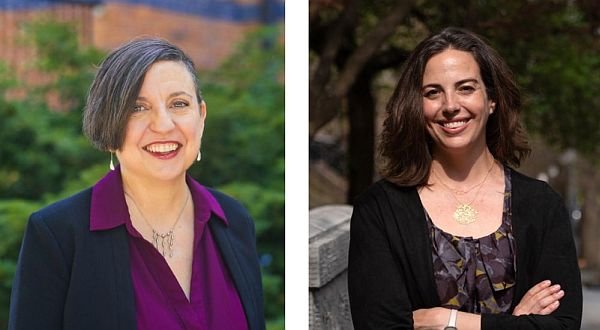
(pictured-left) Kathleen Fitzpatrick is Associate Dean for Research and Graduate Studies in the College of Arts & Letters and University Distinguished Professor of English and Digital Humanities at Michigan State University. Prior to assuming this role, she was Director of DH@MSU and founding director of Mesh Research, a lab focused on the future of scholarly communication. She is project director of Knowledge Commons, an open-access, open-source network serving more than 60,000 scholars and practitioners across the disciplines and around the world, and she is author of several books, including Leading Generously: Tools for Transformation, (Johns Hopkins UP, 2024), Generous Thinking: A Radical Approach to Saving the University (Johns Hopkins UP, 2019) and Planned Obsolescence: Publishing, Technology, and the Future of the Academy (NYU Press, 2011). She is past president of the board of directors of the Educopia Institute and of the Association for Computers and the Humanities.
(pictured-right) Katina L. Rogers is a writer, educator, and independent scholar. She is the author of Putting the Humanities PhD to Work: Thriving in and beyond the Classroom (Duke University Press, 2020); Presence of Absence: Meditations on the Unsayable in Writing (punctum books, 2024); and Unexpected Flourishing: Growth from Decay in the Mycelial University (forthcoming from punctum books). Her work has been featured in The New York Times, LA Review of Books, The Chronicle of Higher Education, and Inside Higher Ed. With over a decade of experience as a researcher, administrator, and educator, Dr. Rogers works with colleges and universities to design and implement creative, sustainable, and equitable structures for graduate education through Inkcap Consulting, which she founded in 2021. She holds a PhD in Comparative Literature from the University of Colorado at Boulder.
Planning Committee:
- Gwendolyn Pough, Associate Dean of Strategic Initiatives, Arts and Sciences; Dean’s Professor of the Humanities, Professor of Women’s & Gender Studies, SU
- Vivian May, Director, Syracuse University Humanities Center; Director, CNY Humanities Corridor; Professor of Women’s & Gender Studies, SU
- Brice Nordquist, Director, Engaged Humanities Network; Dean’s Professor of Community Engagement; Associate Professor of Writing Studies, Rhetoric and Composition
- Sarah Workman, Director for Research Development for the Arts and Humanities