
HC Dissertation Fellows Chart New Ground in Philosophy and Pedagogy
Challenging established conventions in their fields, doctoral students Kellan D. L. Head and Abigail H. Long apply humanities research to current issues.

The Humanities Center’s 2025-2026 Dissertation Fellows, Kellan D. L. Head (philosophy) and Abigail H. Long (composition and cultural rhetoric), are forging new paths in the Humanities and challenging prevailing ideas in their fields. From philosophy to writing pedagogy, Head’s and Long’s dissertations plant intellectual seeds that have been nurtured by their research, past academic pursuits, and personal experiences.
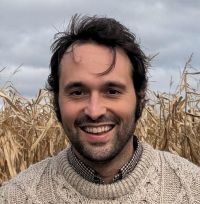
With a background in linguistics and cognitive science, Kellan Head was always interested in a cognitive approach to thinking about beliefs: how they work, and how beliefs shape our worldviews. In philosophy, the study of knowledge and belief is called epistemology, which sits at the core of Head’s dissertation, Epistemic Value and Epistemic Goods.
A dominant view in contemporary analytic philosophy holds that truth is the most fundamental epistemic value, if not the only one. Head’s dissertation, however, challenges this notion by identifying another epistemic value that must be accounted for: “vividity.” To Head, vividity is the quality of coherence among beliefs, referring to how beliefs hold together, work together, and reinforce one another.
“What I'm arguing is that you can have a set of beliefs about something, maybe about the world…Even if they're not true, even if they're false, as long as they have this vividity — where they sort of cohere in a rich, sophisticated way — that is fundamentally epistemically valuable, also,” Head asserts.
Head’s project addresses, for instance, the emergence of misinformation and conspiracy theories, particularly in today’s political rhetoric. Head’s concept of “vividity” is especially relevant in considering how so many people seem to operate with unexamined, default worldviews. Here, the key question of a belief shifts from “is this true?” to “does this belief fit with how I already understand the world?”
As Head puts it, “People generally want a vivid picture of the world…they want to make sense of their experience. And sometimes they form false beliefs in order to make sense of things.”
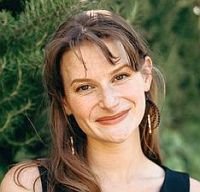
Abby Long’s dissertation, (Re)Composing Friction: Writing Beyond the Seams, questions the commonly used “multiple-choice” ways of categorizing student behavior, and argues for a more inclusive approach to teaching writing. For example, if a student misses a deadline for an essay, the explanation is often treated as a closed case: the student procrastinated, failed to prioritize, or was simply “lazy.” Long challenges this by identifying the nuanced reasons behind why a student can experience feeling “stuck” in their work.
That’s the core of Long’s dissertation: how and where do people get stuck? Rather than framing stuckness as a personal failure, Long reframes it as a signal that something in the learning environment isn’t working for that particular writer. By drawing on disability studies and her own experiences, Long identifies a range of blockages — from emotional to psychological — that can lead to students experiencing stuckness, particularly when it comes to writing and writing courses.
Educational environments, suggests Long, can be enabling or disabling, and centering the wider contexts in which we write, learn, and teach is important.
“I'm trying to find language that can be a bridge between the experiences of disabled and non-disabled writers,” said Long. “When we’re writing, we all get stuck in different ways—and the strategies that support us differ, too. For example, the friction of having a short-term deadline can motivate some writers, yet for others, it can cause them to shut down. So, as teachers, it’s really important to trust students as the experts in their own experience and needs."
Recognizing this nuance opens the door for alternatives beyond simply telling students to “push through.” As Long describes it, students need a “springboard” not a “wall.” Rather than expecting students to “rush” or “force” their writing, Long’s research offers different approaches that respond to students’ varied learning styles and access needs.
In different fields, and in different ways, Head’s and Long’s research opens up compelling avenues for expansion. Head intends to form a “launching pad” for understanding why and how belief systems operate, especially in the current sociopolitical sphere — as well as how accessibility, heuristics and even morality play a role in cementing certain belief systems. Long’s research aims for new advocacy in teacher-student relationships — one that hopefully expands beyond the pedagogical sphere to offer insight on stuckness, in areas of writing and beyond.
All are welcome to preview brief video presentations by each of the AY26 Dissertation Fellows before joining the Humanities Center for live conversation and Q&A about their work in a Meet the Scholars Coffee Hour event on Feb. 27 in Tolley 304 (with hybrid option).