
‘Plants and Animals in Latin American Cultural Production’ Breaks Disciplinary Divides
Cristina Pardo Porto's recently released volume offers an interdisciplinary approach to ecocriticism and environmentalism.
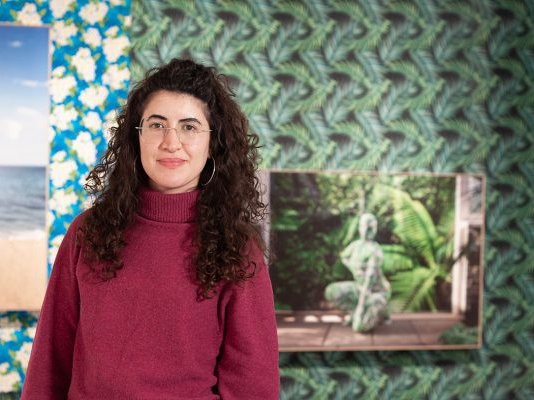
In April of 2022, while scrolling “academic Twitter,” Cristina Pardo Porto came across a post by Oscar Pérez, a professor at Skidmore College seeking collaborators for a new book on plant and animal studies.
Intrigued, she reached out to Pérez, beginning a virtual exchange that blossomed into the mentoring relationship and collaborative effort that resulted in Plants and Animals in Latin American Cultural Production (2025, University of Florida Press). The volume explores how a more-than-human approach to cultural production offers new perspectives and understandings of the environment that decenters humans. Pardo Porto, Pérez, and numerous other collaborators specifically engage with Latin American media across historical periods, incorporating a non-anthropocentric viewpoint into each of their zones of expertise.
Pardo Porto and Peréz’s collaborations were further bolstered via support from a Central New York Humanities Corridor working group, Mexicanists of Central New York, that they both belong to. As Pardo Porto explains, “this group has been a key space for networking, collaboration, and, most importantly, community building. In Fall 2024, our colleagues Debra Castillo and Carolyn Fornoff from the group took the lead in organizing a Mexican Studies symposium at Cornell, where several of the book’s collaborators participated.”
Pardo Porto’s expertise lies in visual culture. One of her early academic focuses centered on art photography, which included her own studio-based practice. This hands-on experience with visual art inspired an experimental mindset that continues to drive her scholarly pursuits.
“I've always been an interdisciplinary scholar, bridging scholarship with practice and merging different ways of thinking about images, culture, literature, and what surrounds us,” said Pardo Porto.
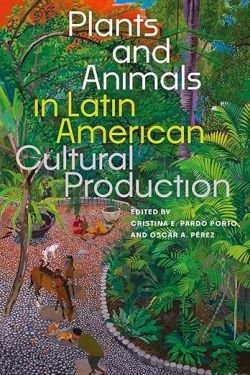
Plants and Animals in Latin American Cultural Production is rooted in this expansive, cross-disciplinary thinking. The book, challenging human-made hierarchies, delves into environmental studies by integrating the realms of flora and fauna: this method is intentional, as it mirrors nature’s interconnectedness while also charting how cultural texts articulate symbiosis between plant and animals.
“Plant studies and animal studies have been traditionally two separate fields,” Pardo Porto commented. “However, there have been new conversations asking what happens if we bring these two fields together?” The book’s main intervention examines how merging these studies opens new interpretations and knowledge about the natural world.
“We wanted to break those disciplinary divides.”
Fusing these fields, the book’s authors analyze different modes of cultural production — including Latin American stories, poetry, visual art, and film — to address several themes: anthropocentric perspectives, language and communication between humans, plants and animals, colonialism, nature’s resistance to human power dynamics, and the politics tied to plant and animal life.
Pardo Porto’s chapter folds her visual culture background into ecocritical awareness by focusing on 19th-century photography of the Panama Darien Rainforest.
The U.S. sponsored land surveyors to scout out the rainforest’s potential as a construction site for the Panama Canal. Pardo Porto analyzes land surveyors’ photographs and reports — not from the perspective of humans weighing the forest's suitability for industrial invasion, but from the perspective of the land.
To highlight how these images convey the land’s refusal to be tamed, she focuses on specific visual elements: disruptive blurs in photographs from animals moving too quickly for the slow-shuttered technology; pictures of “Sensitive Plants” (Mimosa pudica) opened proudly, even within inches of the camera’s lens; etc. To Pardo Porto, these photographs capture nature’s resistance.
Her speculative, poetic outlook on these images also challenges photography’s presumed focus, echoing the larger non-anthropocentric approach of the book. Pardo Porto invites us as readers to pivot away from enduring narratives of the natural world as something purposed to serve humans, something constantly subject to human domination, to, instead, a sovereign entity capable of opposing and refusing destructive intervention.
“This speculative exercise is useful because I imagine these people [who took the photographs at the time] didn't even think about how nature was part of that place. We need to be more aware of how environments participate in shaping a place, including its ecological systems and the communities that live within them.”

Pardo Porto points out that the beyond-human lens of Plants and Animals in Latin American Cultural Production allows for deeper resonance with environmental issues, like climate change. With these new conceptions, “we become more sensitive,” she observed.
A Faculty Fellowship with the Syracuse University Humanities Center (Spring 2024) provided early support for this book project. This month, Pardo Porto was also awarded a 2026 Women Photographers International Archive (WOPHA) Research Fellowship award, where she will take her environmental and ecocritical perspective underwater, thinking about the stories underwater photography and art can share about marine ecologies. In this Miami-based residency, Pardo Porto will also address Florida’s Latinx and Caribbean diaspora, environmental racism, and underwater tourism, among other interrelated themes.
“I feel like the humanities are really opening new doors to understanding what’s happening around us, how the environments are changing, and how to relate ourselves to what surrounds us,” said Pardo Porto. “The humanities offer important possibilities for reading and inhabiting our surroundings in a different way.”