
Research Development
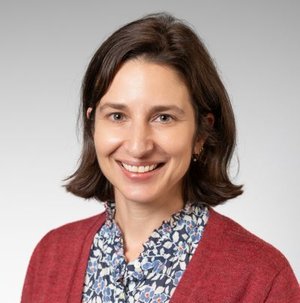
Sarah Workman, Director for Research Development - Arts & Humanities
srworkma@syr.edu
Sarah Workman is Director for Research Development, Arts & Humanities, in the Office of Research, where she works across schools and colleges to support federal, foundation, and fellowship submissions and provide strategic research consultations for individuals and entities across the university. This includes working one-on-one with faculty and research teams to identify funding opportunities, brainstorm project ideas vis-a-vis sponsor solicitations, review and edit proposals, guide the proposal submission process, and facilitate connections with institutional partners. As a hub for humanities research support, she works with colleagues campus-wide in Corporate and Foundation Relations, the Office of Sponsored Programs, Advancement, and SU Libraries to build campus-wide research infastructure.
Before arriving at Syracuse from Georgetown University in 2019, Sarah worked with faculty-staff cohorts, managed internal funding for hybrid learning programs, and wrote humanities curricula. She also designed and taught courses for writing and Jewish civilization programs. Sarah earned her Ph.D. in English from the University of North Carolina at Chapel Hill.
Current notices and opportunities...
- Looking for internal or limited submission funding opportunities? Visit the Syracuse University Application Portal for upcoming dates and deadlines.
- Learn more about Office of Research Development resources and services.
- View upcoming external fellowship deadlines under Humanities Research Development News.
- Access bourse tips and reminders for spending your research funds from the CAS Budget Office.
- See campus-wide opportunities for humanities and arts funding.
- View key dates and deadlines for workshops and funding.
- Check back often for updates and registration links.
Why apply for funding?
- Enhances research & scholarship
- Broadens your networks, builds connections
- Contributes to your tenure & promotion portfolio
- Helps define ideas for your books & articles
- Provides opportunities for mentoring and collaboration
- Successful awards pave the way for other opportunities
How can I support your research?
- Create a timeline of funding goals and priorities across your career trajectory.
- Identify internal and/or external funding opportunities around a project or idea.
- Brainstorm how to best present a project or idea to a particular funder.
- Provide advice and feedback related to specific funders and project ideas.
- Review and edit proposals.
- Research funders and previously successful applications.
- Connect you with previous grantees.
- Coordinate additional reviews and feedback.
- Convene groups for interdisciplinary and multi-institution proposals.
- Guide you to funding resources available through SU and connect you with institutional support from Corporate and Foundation Relations, SU Libraries, and Office of Sponsored Programs, etc.
- Listen to your ideas for strengthening humanities work on campus.
Writing Support
Humanities Research Development offers writing circles to faculty at all ranks at ongoing intervals throughout year. Writing circles provide faculty a chance to connect with peers outside their department, give and get feedback on a work in progress, and reach manageable goals with the generous support of peers and facilitators in a low-stakes environment.
In its sixth iteration, this writing circle is primarily designed to support faculty planning to submit proposals for short-term or long-term fellowships. Depending on the number of participants, faculty meet weekly or bi-weekly from February to April to discuss works in progress with a faculty facilitator. The Spring 2027 sign-up form, which contains more information, is available online. Previous participants credit the circle with prompting "major breakthroughs"; pushing past writing impasses; making timely progress towards the "next" project; developing project materials adaptable for P&T files, book proposals, and introductions; and guiding successful submissions to Fulbright U.S. Scholar and Newberry Library competitions.
Piloted in Summer 2022 with five faculty members, Give and Get Feedback Sessions invite faculty to set and share a reasonable, achievable goal over the summer to reach a full draft of a piece of writing to workshop with peers. A piece of writing could be (but is not limited to) a chapter or manuscript excerpt, journal article, grant proposal, book proposal of no more than 20 – 25 pgs (or shorter). Offered biennially. Reach out with questions and to receive more info.
Each fall, The College of Arts and Sciences and the Syracuse University Humanities Center invite proposals for Humanities Book Manuscript Workshop grants. Typically, grants are awarded in two categories--pre-tenure assistant professors and tenured associate professors--and the deadline falls in December. Applicants should be close to completing a book-length manuscript and interested in hosting a virtual discussion of their project by three senior, external scholars in their field. More information may be found in the most recent call for proposals on the Syracuse University Application Portal. Currently, the program is open to faculty in The College of Arts and Sciences and Maxwell School of Citizenship and Public Affairs.
Previous recipients include:
2026-2027
- Joseph Wilson (Writing Studies, Rhetoric, and Composition), Friction Literacies: Economies of Translation in Composition
- Jennifer O'Reilly (African American Studies), Literary Conjurors: Mediating Africana Spiritualities through Twentieth Century American Literature
- Crystal Bartolovich (English), Hating Utopia Properly
- Kara Richardson (Philosophy), Avicenna on Causation and the Principle of Sufficient Reason
Maxwell
- Michael Ebner (History), The Fascist Genocide of the Bedouin in Cyrenaica, 1922–34
2025-2026
Arts & Sciences
- Krista Kennedy (Writing Studies, Rhetoric, and Composition), Cyborg Health: The Law and Ethics of Artificial Intelligence in Health Care
- Cristina Pardo Porto (Languages, Literatures, and Linguistics), Latent Photographies. A Latinx/Diasporic Reframing of the History of Photography
- Marcia Robinson (Religion), "Out Over 70,000 Fathoms" with the Lillies and the Birds: Kierkegaard on Religion
- Stephanie Shirilan (English), The Breathing World, A Natural History of Air in Shakespeare
- Arun Brahmbhatt (Religion), Debating Sanskrit: The Scholastic Imperative in Modern Hinduism
- Ellen Hebden (Art & Music Histories), Beauties in Motion: Aesthetics, Politics, and Gendered Mobilities in Mozambique
- Eunjung Kim (Women's and Gender Studies), Dignity Archives
Maxwell
- Mark Schmeller (History), The Book of Mormon
2024-2025
Arts & Sciences
- Leonard Grant (Writing Studies, Rhetoric, and Composition), Being There: Trauma, Community Engagement, and the Health Humanities
- Alicia Hatcher (Writing Studies, Rhetoric, and Composition), Articulating and Interrogating Black Embodied Resistance: Using Performative Symbolic Resistance as a Tactical, Analytical Tool
- Patrick Berry (Writing Studies, Rhetoric, and Composition), Literacy and the Humanities after Prison
- Sascha Scott (Art & Music History), Modern Pueblo Painting: Colonization, Aesthetic Agency, and Indigenous Visual Sovereignty
Maxwell
- Chie Sakakibara (Geography and the Environment), Decolonizing Alaska: Linda Infante Lyons and Alaska Native Visual Sovereignty
- Catherine Herrold (Public Administration and International Affairs), (Re)Mobilizing the Masses: Civil Society and Social Change in teh 21st Century
- Radha Kumar (History), Whose River? The Kaveri and Political Belonging in Modern India
2023-2024
- Shira Schwartz (Religion), Yeshiva Quirls: A Textual Ethnography of Jewish Reproduction
- Margaret Innes (Art History), Collective Forms: Photography in the Era of American Communism
- Ethan Madarieta (English), The Body is (Not) the Land: Memory, Translation, and Territorial Aporias
- Verena Erlenbusch-Anderson (Philosophy), Traitors to Forgetting: Counter-Memories of U.S. Domestic Terrorism
- Gail Bulman (Languages, Literatures, and Linguistics), The Artistic, Social, and Economic Impact of the Microteatro Transnational Theater Network
- Ana Mendez-Oliver (Languages, Literatures, and Linguistics), Frontier Identities: From Confessional to Racial Subjects in the Iberian World
- Tanisha Jackson (African American Studies), The Art of Self-care: Black Women Art Ecosystems as Sites for Wellness
2022-2023
- Mariaelena Huambachano (Religion), Recovering Our Ancestral Foodways: Indigenous Traditions as a Recipe for Living Well
- Jeanette Jouili (Religion), Islam on Stage: British Muslim Culture in the Age of Counterterrorism
- Ruth Opara (Art and Music Histories), Music, Motherhood, and Transnationalism
2021-2022
- Carol Fadda (English), Dissident Citizenships: Arab and Muslim Narratives in an Age of ‘Terror’
- Gareth Fisher (Religion), Temples and Teahouses: Buddhism and Secularity in Xi Jinping’s China. The book explores how Buddhist monastics and laypersons negotiate and reshape the boundaries between the secular and the religious in China today through the construction and expansion of both authorized Buddhist temples and Buddhist-themed teahouses. It examines how these religious entrepreneurs carve temples and teahouses into spaces of otherwise where social roles and values outside of the secular mainstream can be fostered.
- Danika Medak-Saltzman (Women’s and Gender Studies), Specters of Colonialism: Native People, Visual Culture and Colonial Projects in the U.S. and Japan
- Patricia Roylance (English), The Textures of Time in Nineteenth-Century U.S. Media. This project investigates the role of media in connecting people to the past and the future, by tracking the varying temporal experiences offered by the different media formats in which particular texts—John Winthrop’s journal, Uncle Tom’s Cabin and the story of the Haudenosaunee Confederacy’s founding—appeared.
Led by Liz Lance and Sarah Workman in the Office of Research and supported by the Syracuse University Humanities Center, the Draft Dash encourages full-time faculty of all ranks and disciplines to participate in a two-week writing challenge in community with colleagues from across the university. Read more about the 2026 inagural Draft Dash on the poster Liz and Sarah presented at the 2026 conference for the National Association of Research Development Professionals (NORDP).
Mark you calendars for the Spring 2027 Draft Dash: January 25 - Feburary 5, 2027! Registration Information coming in Fall 2026.
Additional Resources
- Proposal Support: New to proposal writing? Refer to the Grant Application Workflow, which guides humanities and creative arts faculty through the fellowship or research proposal development timeline.
- Resources for Creatives: Check out our resources page for finding funding in the creative arts, media, and public communications.
- Trainings and Presentations: Visit the Office of Research Trainings and Presentations page to access the archive of humanities trainings and presentations.
- Communications Quick Guide for Humanists: This guide is aimed to help humanists navigate the various communications offices and resources at Syracuse University that can help increase the visibility of research and creative work.